Thursday, August 22, 2013

EVGA Video Cards now to come with Double Bios

If your overclocking fails try again

Obliterating a video card’s Bios by overclocking it to much way can make into a glorified paper weight. To solve this problem, EVGA has now started making its video cards with its new “Double Bios”. The feature gives users two Bios to mess around with, so if their video card’s Bios gets corrupted they can flick a switch and it can be set back to its default bios.


The company says that its “Double Bios” feature is to help unlock the additional power of overclocking and to allow users to experiment with its new cards. EVGA will offer this feature on its 700-series video cards which range from the GTX 760 up to the GTX 780.


EVGA is celebrating the new release of its new “Double Bios” video cards by giving away 2 GeForce GTX 780, 770 and 760s. You enter to win these cards here.

Tuesday, August 20, 2013

ASUS Launches H81 Series Motherboards

A set of Entry-Level Haswell boards


Asus has announced that it will be releasing six entry-level motherboards sporting Intel’s entry-level H81 Haswell chipset. The boards feature several different form factors which include ATX, Micro-ATX, and Mini-ATX.

The H81 series is comprised of the H81-Plus, H81M-Plus, H81M-A, H81M-C, and the H81M-E and the H81I-Plus. All of boards include two DDR3 1600Mhz dimm slots supporting up to 16GB of RAM and one PCI-Express x16 slot (@16). Other specifications include two SATA 6GB/s ports, Realtek 7.1 Audio, and USB 3.0.

Asus claims its new boards feature 5K gold capacitors which are supposed to “last more than twice as long as traditional electrolytic capacitors — over 50 years of continuous use under typical conditions (at 65 degrees Centigrade).”

Currently there is no word on how much the new H81 boards will cost. However, on Newegg H87 motherboards are priced at $80-$120, so the H81 motherboards should be around the same price or cheaper.

Friday, July 26, 2013

Google Refreshes its Nexus 7 Tablet

The original Nexus 7 launched last year in mid July for $200 and Google has finally released its successor. This refreshed tablet is Google's 2nd generation of the device and it is slightly more expensive than the original Nexus 7. The entry level 16GB model is currently retailing for $220 and a 32GB version is selling for $270. Google's newest Nexus device comes with a slew upgrades over its original 7 inch slate.

Google decided to up the retinal display on its newest device as the new Nexus 7 sports a 1920x1200 screen whereas the original had a 1280x800. We're excited about this as it means the Nexus is going from 216 pixels per inch (PPI) to 323 PPI.

Another welcomed upgrade coming to the Nexus 7 is its updated processor and RAM. Last year's device rocked a Tegra 3 ARM CPU clocked a 1.2GHz, which is replaced by the more powerful 1.5GHz Snapdragon S4 Pro. The first gen Nexus featured 1GB of RAM while the newest model is rocking 2GB giving users more power for multitasking goodness.

Google didn't change the Nexus 7's 1.2MP front facing camera, but it added a 5MP rear facing camera and slightly reduced the tablet's weight too. Last year's model weighed in at 0.74 lbs while the 2013 slate weighs 0.64 lbs. The weight reduction is probably because the Nexus 7 now has a smaller 3950 mAh battery instead of the 4325 mAh variety found in the first gen model.

If you want to get your hands on the slate you can purchase one from Best Buy as the retailer just started selling them. Another place to purchase the tablet is the Google Play store, though it won't sell through that outlet until July 31st.

We're excited about the new Nexus tablet and hope this refresh means Google will release an updated version of its Nexus 4 phone soon too.

Sunday, June 16, 2013

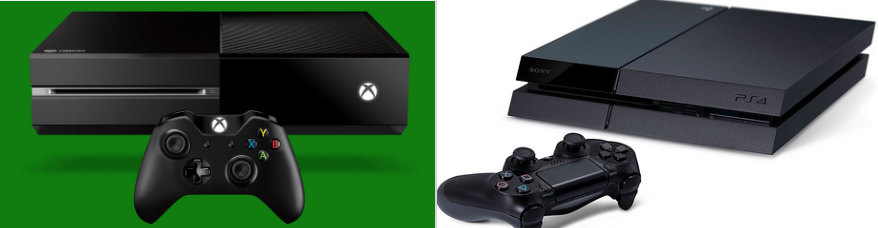
Why Videogames won't Look Much Better on PC because of Xbox One and PS4


Sony's and Microsoft's new consoles are about to launch this November just before the 2013 Holiday season. What does this mean for gamers? Well if you're a console gamer you'll get your much anticipated Next-Gen console at this time and it will be great. If you're on the PC on the other hand you won't see much of a difference and I'll tell you why.

-Chris Zele

Reason 1: The Next Gen Consoles have Low-End Hardware

The Xbox One and PS4 both run an AMD APU aka Advanced Processing Unit which combines the processor and graphics card onto a single chip. The problem with the APUs being used in the Next-Gen Consoles is that they are using AMD's Jaguar cores which aren't very high end as they are equivalent to Intel's Atom processors. Yeah does Atom ring a bell the processor that powered all of those shitty notebooks from yesteryear and yes it's that bad.

Reason 2: Games Cost a lot of Money to Make

Big budget games from developers like Square Enix, Ubisoft, and Rockstar need to sell millions of copies to break even as development costs can be 60+ million dollars. The result of extremely high development costs has made it so developers/publishers have been closing down left and right. THQ is the biggest company to close down in recent memory and it looks like Square Enix may be the next company to implode as its recent titles haven't sold very well. 

What does the last paragraph have to do with PC gaming? Our take is that PC gaming is not going to get better because developers are going to cut back on dev costs because they have been going into debt recently. Devs will most likely scale back costs and make lower fidelity games or games that look marginally better than they do now for PC users. Case in point, have you taken a look at the newest Battlefield 4 trailer? It looks the same as Battlefield 3, so visually it hasn't gone anywhere from the last game and this is likely the case for other upcoming games.

Reason 3: The New Consoles aren't Upgradeable

When PC gamer's want to upgrade their rigs they do so whenever they please. If you're an Xbox 360 or PS3 gamer your hardware is locked down and you can't add more RAM or upgrade the video card or CPU. The Next-Gen consoles will hold back PC gaming just as the previous consoles have done before. I just don't see the new consoles pushing gaming into the next generation with their lack of upgradeability. PCs can see a large boost in performance when their video cards are replaced but the consoles will see no such boost and will be left in the dust in no time. 

Video Card: Buyers Guide AMD VS. Nvidia


When it comes to GPUs there are a plethora of options to choose from scaling from $50 all the way up $1000. In this buyers guide we'll tackle all the price points to tell you where to spend your money from entry level cards all the way up to the ultra high-end enthusiast performance video cards.

Entry Level: $150 AMD Radeon 7790 VS Nvidia 650 Ti

Most people consider an entry level video card a $50-$100. Recently CPU graphics from both Intel and AMD have caught up to discrete video card performance and made it, so people don't need to buy a low end GPU anymore.

Anyways lets compare AMD's 7790 to the Nvidia's 650 Ti which are both around $140-$150 or so. When you look at the benchmarks the 7790 beats the 650 Ti in almost every benchmark that Ryan Smith from Anandtech ran on the two GPU's. The AMD GPU also came very close to the performance of the 650 Ti Boost which is currently a $170 video card. AMD's 7790 card won all of the compute tests beating out both Nvidia cards handily in synthetic benchmarks. What makes AMD's 7790 appealing is its $110 game bundle consisting of Bioshock Infinite, Tomb Raider, and Far Cry 3 Blood Dragon.

Winner: AMD

Mid Range: $250-$300 AMD Radeon 7950 
VS Nvidia GTX 760


There are many options at this price point ranging from Super-clocked GTX 660's to stock clocked Radeon 7950's. The two card facing off here are the AMD 7950 at $260 VS Nvidia's GTX 760 at $250. The GTX 760 wins almost all of the gaming benchmarks run by Anandtech and when it does lose to the 7950 its not by much. Games where the GTX 760 killed AMD's second tier card were BF3, Portal 2, and Skyrim which the Nvidia card won beat the 7950 by around 10FPS or more in each of these games.

Winner: Nvidia

High End: 7970 GHz Edition VS GTX 770 $350-$400


The battle at the high end is insane as AMD and Nvidia as both companies are very close to each other in this price bracket. AMD offers their 7970 GHZ Edition here while Nvidia has their newly launched GTX 770 here. Both video cards are very close to one another when it comes to performance and power consumption. If you're at this price point and want the card that is the faster of the two right out of the box choose the 7970. However, if you're an overclocker you'll want to go with the GTX 770 as the video card overclocks well and pushes past AMD's flagship card handily after it's overclocked to 1200MHz.

Winner: Tie

Ultra: $1000 7990, VS GTX 690, VS GTX Titan 


When it comes to the Ultra category three cards stand out at the premium price of $1000 which include Nvidia's GTX 690 and GTX Titan along with AMD's Radeon 7990. Nvidia's GTX Titan beats the GTX 690, and 7990 single handily in this category. The Titan is a single GPU card where as the 690 and 7990 are both dual-GPU video cards and it performs the same if not better them in some cases. In Anandtech's review of the card the GTX Titan matched the 690 and 7990 in many of the website's benchmarks. However, the Titan did lose to both the 690 and 7990 many times in benchmarks, but the card's advantage is that you don't need to wait for Crossfire or SLI profiles to come out like you do for the 7990 or GTX 690.

Winner: Nvidia's GTX Titan


Wednesday, May 1, 2013

Tomb Raider PC Review

Lara's beginning as a Kick-Ass Archaeologist
Tomb Raider offers players intense hair effects with AMD's Tress FX effect, but it will tax your framerate.
The original Tomb Raider was released back in 1996 and was one of the first Indiana Jones esc games to hit the streets. Lara Croft is back in this prequel and she’s not as top heavy as she was in franchise's previous titles, so for those looking for a chick with knockers bigger than her head you’re out of luck. Tomb Raider delivers a fantastic experience all around hindered by some graphical issues.

In Tomb Raider you'll progress through the campaign you go through places called camps which have you kill hordes of enemies and wild animals. Your main enemies are the Solarii which are your human enemies in the game who have inhabited the island you are on. In the camps you will find scrap metal which can upgrade your weapons increasing their damage, range, capacity, or special ability. To upgrade your gear you will need to be at a camp fire, however some maps are very large which makes getting to campfires a long trek across the map just to modify your weapons. The campfires also allow you fast travel to previous camps you have visited in the game. Mixed in throughout the camps are puzzles or obstacles that you'll need to perform some sort of platforming to get around.

The bow and arrow was our favorite weapon to use as it killed enemies silently.
The weapons in Tomb Raider are powerful and fun to use as there are a wide array them to choose from. We liked using the bow and arrow we found it was great at long range and it allowed us to get one-hit headshot kills. The bow also let us get silent kills which made being stealthy easy instead of having to use Lara’s other weapons since those weapons are guns. Tomb Raider starts you out with the bow and arrow and you’ll pick up an assault rifle, a shotgun, and pistol along your journey. The shotgun is badass at close range and it picks apart enemies quickly and easily. Lara’s pistol is alright, but we didn't care too much for it as we didn’t see it offering a real advantage over the bow and arrow or the other weapons.

Tomb Raider’s graphics are beautiful and it is definitely a title that will push your GPU. When testing the game’s video capabilities we found that it ran fantastically on our rig, which has an overclocked Intel 2700k processor and a 660 Ti video card. We averaged 60fps in the games high-setting preset at 1920x1080 with v-sync enabled. We also tested the game on an AMD 6850 and averaged 45fps on the high setting preset. The textures in the game are all high resolution which is a plus as many games today have some low-texture spots. A few times, however we ran into a few graphical glitches where the plants shadows were rendered incorrectly as they were constantly flashing. We only experienced this on my 660 Ti, so this is mostly an Nvidia problem. The game also stopped working sometimes and it seemed to crash for no reason on me which was kind of annoying have to restart it many times during my playthrough.

There's plenty of rock climbing that will need to be done in Tomb Raider.
We ran the game on Ultimate setting with AMD’s TressFX enabled and saw that the framerate on the 660 Ti was cut in half as we averaged only 30fps on this setting at 1920x1080. TressFX is a GPU hog, so we don’t recommend using it, as it’s the main culprit of framerate drops and dips in Tomb Raider. Every time there was a close up of Lara’s hair the framerate dipped to an unplayable 15 to 20fps.

The game only took us 9 hours to complete and it allows you to go back and roam around the island after you've finished the campaign. Once you've finished the campaign you can go back to the island and search around it for collectibles and fight some Solarii too.

For those who like collectibles there are plenty of treasures to scour the camps for. The game has achievements for collecting the treasures, so those who like to dig around for goodies will like this aspect of Tomb Raider. We liked collecting them as they looked cool as it gave me an incentive to search the camps explore the island.

The Mulitplayer is where this game is flat out horrible and we didn’t enjoy it very much at all. Tomb Raider has a capture the flag mode which has players play on two different sides one side being the Solarii and the other being Lara’s crew. The two factions fight each other in each multiplayer round and the game definitely favors Lara and her mates over the evil Solarii because the Solarii lose almost every match we played. There is a capture the flag game type which gives Lara’s crew the ability to stay alive on the ground and shoot their foes while they are downed basically like the Last Stand perk in COD. Lara’s side can also heal these players while the Solarii don’t have this perk at all. The end result is that the Solarii get smashed in multiplayer games and this puts a blemish on the otherwise fantastic game.

Tomb Raider is a great game and is one of the best games we've played, so far this year. We enjoyed the awesome platforming and solid gameplay mechanics of Tomb Raider. The story was kind of mediocre, so don’t expect anything fantastic like Uncharted or Bioshock here. This game has put Tomb Raider back on the map and has made it relevant again and it’s a kickass prequel everyone should play.

-Chris Zele

Verdict: 9

(+) Weapons that are fun to use; Great platforming; Good replay value.

(-) Unbalanced Multiplayer.

DMC: Devil May Cry PC Review


New Dante Same Old Gameplay

Dante's back with his high flying acrobatic sword slashing this time with an emo twist.
Capcom’s popular hack-in-slash action game Devil May Cry series debuted back in 2001. This DMC is made by Ninja Theory instead of Capcom, but fans worried that the series will be tarnished shouldn’t be as this game is in good hands. The last Devil May Cry game came out back in 2008 and the newest edition to the franchise is a reboot and has a new story of Dante and Virgil in a Punk-Emo world. You play as Dante a Nephilim a half demon half human who is on a mission to kill all demons in the world. Dante looks completely different in this game as he has brown instead of white hair and he wears clothes that look like he’s going to a heavy metal concert. This DMC is different from the other DMC games as it is made by a new developer Ninja Theory. The series is known for its badass weapons and insane kills and that hasn’t changed here, but this game is compatible with keyboard and mouse, a good controller like Xbox 360’s is a must.

Like previous titles, the game puts gamers in a closed world for each mission and has you killing waves of enemies and along the way it mixes in some platforming. Devil May Cry also gives you a variety of weapons to kill the barrages of demons you will face. You’ll receive Souls and Red Orbs for killing demons and you’ll get more of these as your kill streaks get larger. The Souls you collect can then be used to purchase skill upgrades while the Red Orbs can be used to buy item such as health bars and revival orbs. At the end of the each mission you are given upgrade points for the amount of Souls you have collected and you can spend them on upgrading your weapons and abilities.

Like the other games, you’re armed with your trusty Rebellion sword and pistols Ebony and Ivory. As you progress through the game you’ll pick up more weapons along the way. These weapons are badass and you’ll have the option of upgrading them via Souls as you accumulate them from killing enemies and completing missions. We liked the Osiris the best a large blue demonic scythe that allowed us to kill multiple enemies with ease and we liked killing them with our Prop move which allowed us to throw our enemies into the air and spin the Osiris to chop them up like they were in a meat shredder. The Eryx is also one of our favorites and gives Dante flaming demon fists which you can use to uppercut enemies and smash them into the ground. These demonic fists also made it very easy to juggle multiple enemies at once which made control large crowds quick and easy.

There's plenty of platforming to do in DMC just like in previous games.
The game took us 11 hours to complete which is above average compared to most games coming out these days. Once you complete the campaign you’ll unlock a harder difficulty called Devil Trigger mode. Like previous iterations, DMC also lets you go back through the story with all of your upgrades intact. Devil May Cry also has secret keys that you can find to open special doors. The doors challenge you to kill a group of enemies quickly and reward you with bonus souls for doing so. The game gets a little boring through the last the last half because you just fight mobs of the same enemies over and over. Unfortunately the game also doesn’t offer much replay value after you’ve beaten it as DMC is a very linear game and you usually have only two path options to choose from. DMC also doesn’t have multiple endings to see or alternate choices to make in its’ story that make you want to replay the game.               

The Devil May Cry series is known to be tough as hell, but this iteration wasn’t very hard and we found ourselves blazing through it, while you will die a few times it’s not frustrating. The game actually had a good balance of difficulty.

The sound in Devil May Cry is fantastic and we enjoyed everything in it from its’ voice acting to the its’ Dubstep and heavy metal soundtracks. The sound effects were crisp and clean as we tore our enemies to shreds and well executed.

The Osiris was by far our favorite weapon in the game as it demolished enemies quickly and easily.
Devil May Cry is a game that it needs to be played with a controller which we didn’t like because we prefer gaming with a mouse and keyboard. For the most part the controls were alright on mouse and keyboard, but half way through the game we got to a boss battle where they were way to cumbersome. We found ourselves have to run with WASD and having to press E and F and space bar all at the same time which was frustrating to say the least. 

Visually, the graphics in Devil May Cry do a good job of setting up the Punk-Emo vibe the game is going for. The enemies look great as they are all done up in gold, black, and gray color schemes and they stand out against Dante’s black and red attire. We didn’t like its heavy amount of the motion blur the game uses and there is no way to disable it and it makes the game not look as good as result. Luckily the game runs pretty well. We were able to max it out at 1080p on our overclocked Sandy Bridge system with a Geforce 660Ti with framerates around the 180FPS mark.

Devil May Cry is a game that we loved, but be ready to invest some money into a PC controller if you don’t already have one. Because you’re often fighting the same hordes of enemies, its’ combat can get repetitive. Regardless, we still highly recommend it as it is one of the best third-person action games on the PC we’ve played in a long time.

-Chris Zele

Verdict: 8

(+) Killer weapons; Great difficulty balance, Fantastic sound.

(-) Bad keyboard and mouse controls; Annoying motion blur, Very linear.